Myopia Signs in Kids?

Ethan Sullivan
| 23-04-2026
 · News team
Myopia, commonly known as short-sightedness, has become one of the fastest-growing vision conditions worldwide, particularly among school-age populations. The condition occurs when incoming light is focused in front of the retina instead of directly on it, leading to blurred distance vision.
Over recent decades, increasing academic demands, reduced outdoor activity, and extensive near-work activities have contributed to a sharp rise in prevalence. Early identification plays a crucial role in slowing progression and reducing long-term complications.
Understanding Why Myopia Develops Early
Childhood myopia is influenced by a combination of genetic predisposition and environmental exposure. A family history of refractive changes significantly increases likelihood, yet lifestyle factors are now recognized as equally important. Extended screen exposure and prolonged focus on close objects place sustained demand on the focusing system of the eye. Meanwhile, reduced exposure to natural daylight has been associated with higher risk, as outdoor light appears to support healthy visual development.
How is molecular medicine changing care today? New methods bring more precise health solutions!
Which infections can be avoided in kids? Simple steps help keep them safe and healthy!
Can AI devices improve how you sleep each night? Smart tracking helps build better habits!
The Hidden Force That's Been Pushing Gold Higher for Decades — And It's Not What You Think
Can ginseng really support your immune system daily? See what makes it stand out now!
How does a single gene keep iron levels balanced? Small changes can impact the whole body!
Modern urban living has intensified these risk factors. Many children spend significant time indoors, engaging in activities that require continuous near focus. This sustained visual demand is believed to encourage elongation of the eyeball, which is a structural change associated with myopia progression.
Early Indicators That Should Not Be Overlooked
Early-stage myopia often develops gradually, making detection challenging without careful observation. One of the earliest behavioral signs includes frequent squinting when looking at distant objects, suggesting difficulty in maintaining clear focus. Sitting unusually close to screens or holding reading material closer than typical distances may also indicate early refractive change.
Additional indicators include complaints of blurred distance vision, reduced attention during classroom activities involving visual boards, and increased eye fatigue after sustained visual tasks. Head tilting or excessive blinking can also appear as compensatory behaviors. Because these signs may be subtle, routine vision assessments become essential, even when no obvious difficulty is reported.
Clinical Detection Through Structured Vision Screening
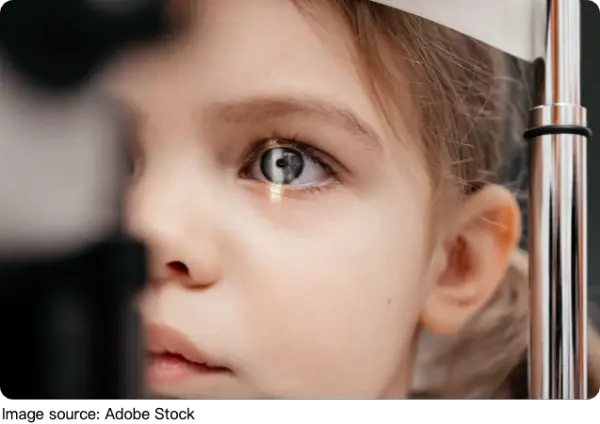
Accurate detection of myopia requires professional assessment using standardized vision screening methods. Visual acuity testing is commonly used in schools and clinics to evaluate clarity of distance vision. When reduced sharpness is detected, refraction testing is conducted to determine the degree of refractive error.
Cycloplegic refraction, which temporarily relaxes focusing ability, provides a more precise measurement in pediatric cases. This method is particularly important because younger individuals often have strong focusing flexibility that can mask early refractive changes. Regular screening schedules are recommended during early school years, as this period often corresponds with the onset of rapid visual development changes.
Technological Advances in Early Diagnosis
Recent advances in imaging and diagnostic tools have significantly improved early identification of myopia. Optical coherence techniques allow detailed visualization of internal ocular structures, enabling detection of subtle anatomical changes before significant vision decline occurs.
Digital screening tools are also increasingly used in educational environments. Portable autorefractors and smartphone-based vision assessment applications provide rapid preliminary evaluation, helping identify individuals who require further clinical examination. Artificial intelligence systems are being developed to analyze large-scale screening data, improving detection accuracy and enabling early risk prediction.
Importance of Monitoring Progression in Childhood
Once myopia is identified, monitoring progression becomes essential. Childhood is a period of rapid growth, and refractive changes can advance quickly if left unmanaged. Regular follow-up assessments allow clinicians to track changes in visual parameters and adjust management strategies accordingly.
Intervention approaches may include specialized optical lenses designed to slow progression, as well as behavioral recommendations such as increasing time spent outdoors and reducing continuous near-work strain. Early intervention is particularly effective when initiated during the initial stages of refractive change.
Preventive Strategies Supporting Visual Development
Preventive measures play a key role in reducing the risk of onset and slowing progression. Regular outdoor exposure is strongly associated with healthier visual development, as natural light is believed to support balanced ocular growth. Structured breaks during prolonged near-work activities also help reduce visual strain.
Educational environments can support prevention by incorporating vision-friendly practices, such as encouraging appropriate reading distances and promoting balanced daily routines that include outdoor time. Awareness among caregivers and educators remains critical in ensuring early signs are not overlooked.
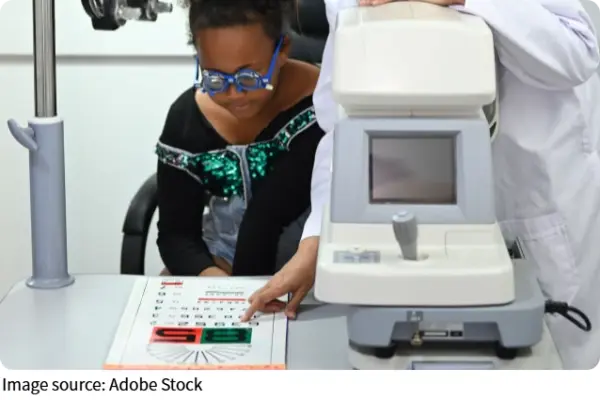
Dr. Sean P. Templeman, a pediatric eye specialist at the Mayo Clinic, emphasizes that identifying and treating nearsightedness early in childhood is vital. He believes that early action is the most effective way to protect a child's long-term vision and ensure they have a better visual future.
Early detection of myopia in childhood is a vital component of preserving long-term visual function. The condition often develops silently, making structured screening and awareness essential for timely identification. Advances in diagnostic technology, combined with improved understanding of environmental and genetic influences, have strengthened the ability to detect and manage early changes effectively.