Investor Discipline

Ravish Kumar
| 15-04-2026
 · News team
A market graph can tempt people to believe the next move is obvious, even when sound investor guidance argues for more restraint. That guidance keeps returning to a simple theme: discipline matters most when markets tempt people to do the opposite.
That is why market interpretation and investor discipline works best when connected to time horizon, diversification, and a repeatable review process rather than to headlines alone. Investors cannot control the market's mood, but they can still control the quality of their process.
Read Exposure
The first job is understanding what the portfolio is actually exposed to. People often think they are diversified until they realize a few positions, sectors, or market themes dominate the account. That concentration can feel harmless when prices are rising and uncomfortable when they suddenly are not. A review should reveal where confidence has quietly become overdependence.
The Job Offer Looked Great in the Meeting — But These Are the Numbers That Really Matter!
Can labs be smarter? AI brings new speed and precision to medical testing!
Can your diet be smarter? Data may guide every meal choice you make daily!
Why wait in clinics anymore? Healthcare is moving straight to your screen!
Revolutionary pill promises longer, healthier lives for dogs of all breeds
Microgravity experiments reveal phage breakthroughs against drug-resistant bacteria
Exposure reviews matter because recent winners naturally become larger over time. If nobody adjusts, the portfolio may stop reflecting the original plan and start reflecting recent excitement instead. That is not always obvious until volatility arrives. By then, the risk is being discovered at exactly the wrong moment.
Match the Horizon
Time horizon should shape how market interpretation and investor discipline is judged. Money needed soon should usually be viewed differently from money with years to recover from market swings. A review that ignores timing can encourage risk that looks acceptable on a screen but feels very different when a real deadline gets close. The purpose of the money should shape the amount of uncertainty the investor accepts.
Matching the portfolio to its purpose also improves behavior. When investors know why the money exists, they are less likely to chase whatever sounds urgent this week. Clarity about purpose can be as protective as clarity about performance. It acts like a filter against noise.
Review the Mix
Rebalancing and periodic review support discipline because they turn abstract strategy into concrete maintenance. If one part of the portfolio has run far ahead, the investor may need to trim, redirect contributions, or otherwise bring the mix back toward the intended level. That keeps the strategy from drifting unattended.
That process is rarely exciting, but it protects the account from drifting into a shape the investor never consciously chose. Without maintenance, success itself can become a source of unintended risk. Routine discipline is often what keeps a portfolio from becoming an accidental concentrated position.
Control Emotion
Overreacting to short-term volatility is often the hidden factor behind weak investment decisions. Market moves trigger urgency, and urgency pushes people toward all-or-nothing thinking. Structured investor education exists largely to counter that impulse with perspective. Process matters most when feelings are loudest.
The goal is not emotional numbness. It is emotional proportion. An investor who can recognize fear, excitement, and regret without handing over control to them usually makes stronger choices over time. That emotional restraint is often what preserves long-term strategy.
Keep the System Clean
A clean review process also depends on organization. Statements, account purposes, beneficiaries, contribution records, and cost awareness all influence the quality of decisions. When that information is scattered, investors spend energy reconstructing basics instead of testing actual strategy. A clean system supports clearer thought.
Good investing is not only about picking assets. It is also about maintaining a system that keeps judgment clear. When the process is orderly, the investor is much more likely to respond to the market with intention instead of impulse. That advantage becomes more valuable during unsettled periods.
Stay Consistent
Consistency is one of the least glamorous parts of investing, but it often does the most protective work. A repeatable review habit keeps market interpretation and investor discipline tied to actual goals instead of to the latest market mood.
When investors return to the same disciplined questions over time, they become harder to shake out of a solid plan. That does not eliminate uncertainty, but it does reduce the chance that uncertainty will dictate the decision.
Expert Insight
Benjamin Graham, investment strategist, said that the investor's chief problem — and even his worst enemy — is likely to be himself, and that the ability to maintain disciplined process during periods of market excitement or fear is the single quality most closely associated with long-term investment success.
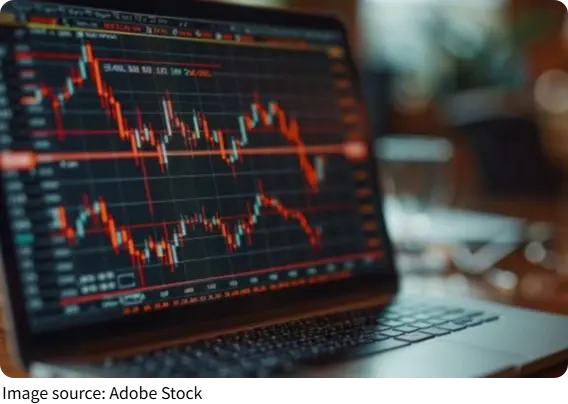
The point of market interpretation and investor discipline is not to predict every market turn. It is to build a portfolio and a process that can absorb uncertainty without forcing bad decisions. That is why disciplined investing often looks calmer than popular investing, and why it usually holds up better when conditions stop being easy. A chart should start a question, not end one. Investors who remember that distinction are less likely to confuse movement on a screen with a change in their long-term plan.