AI in Medical Diagnostic!

Owen Murphy
| 26-03-2026
 · News team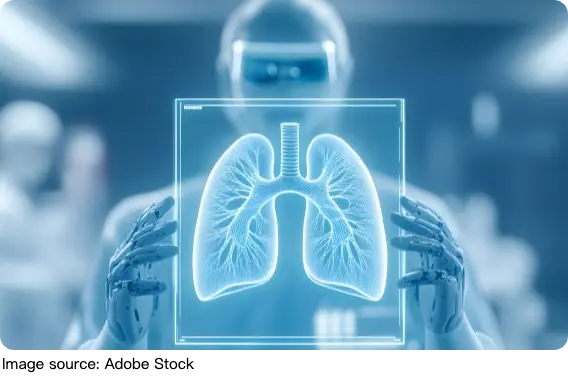
Artificial intelligence (AI) has rapidly evolved from a theoretical concept into a transformative force within modern healthcare. By enabling machines to perform tasks that traditionally require human cognition such as pattern recognition, inference, and adaptive learning—AI is reshaping how clinical decisions are made.
Its integration into diagnostic systems is particularly significant, where timely and precise evaluation often determines patient outcomes. Rather than replacing clinical expertise, AI augments it by processing vast datasets far beyond human capability, offering insights that were previously unattainable.
Undestanding the Spectrum of Artificial Intelligence
AI technologies are commonly categorized into three levels based on capability. Narrow AI represents systems designed for specific tasks, such as detecting anomalies in imaging or predicting disease risk from genetic data. These systems dominate current medical applications due to their reliability and focused design.
Is your heart sending silent warnings? See what could protect it before it’s too late!
Are your workouts truly effective? Data visualization reveals what your body needs!
How setbacks can become stepping stones to deeper growth and renewed purpose
529 Plans vs. Custodial Accounts: Which One Will Actually Make Your Child a Millionaire?
Parents Who Start This Early Always Win — Here's the Education Fund Secret
Here are some essential tips to improve digestion and boost your gut health!
General AI, still largely theoretical, refers to systems capable of performing a wide variety of intellectual tasks comparable to human reasoning. Super AI, an even more speculative concept, would surpass human intelligence entirely, including self-awareness and independent decision-making. While only Narrow AI is actively deployed in healthcare today, ongoing research continues to push the boundaries toward more adaptive and integrated systems.
Core Technologies Driving Medical AI
Three foundational technologies underpin AI advancements in diagnostics. Machine learning enables algorithms to learn patterns from historical data and improve performance over time without explicit programming. Computer vision allows systems to interpret visual inputs such as medical imaging with exceptional precision. Natural language processing (NLP) facilitates the analysis of clinical notes, research literature, and patient records, converting unstructured text into actionable insights.
Transformative Applications Across Medical Fields
Radiology: Enhancing Imaging Interpretation
AI systems in radiology can process thousands of imaging datasets in minutes, identifying subtle abnormalities that may escape manual review. Advanced algorithms trained on annotated datasets can distinguish between benign and suspicious findings with increasing accuracy. This not only accelerates diagnosis but also reduces variability between practitioners.
Pathology: Advancing Digital Diagnostics
Digital pathology has experienced a significant shift through AI integration. High-resolution scanned slides are analyzed using deep learning models that detect cellular irregularities and classify disease patterns. These systems provide consistent results and assist specialists in making evidence-based evaluations, particularly in complex or ambiguous cases.
Genomics: Redefining Precision Medicine
Genomics represents one of the most profound areas of AI-driven transformation. By analyzing massive genetic datasets, AI enables early identification of disease predispositions and supports the development of individualized treatment strategies. Genome-wide association studies (GWAS) leverage AI to uncover correlations between genetic variations and specific conditions, facilitating earlier and more accurate detection.
AI also accelerates drug discovery by predicting molecular interactions and identifying promising therapeutic targets. Additionally, gene-editing techniques benefit from AI-guided precision, minimizing unintended effects and improving outcomes. During infectious disease outbreaks, AI models can track mutation patterns in real time, aiding in rapid response and containment strategies.
Real-World Impact: From Rare Conditions to Critical Care
AI-powered genomics has demonstrated remarkable success in diagnosing rare conditions, significantly reducing the time required to identify underlying causes. What once took years of extensive testing can now be achieved within months through advanced computational analysis.
A notable example is AlphaFold, developed by DeepMind, which predicts the three-dimensional structure of proteins with unprecedented accuracy. This breakthrough has accelerated research in structural biology and contributed to more efficient vaccine development by providing detailed insights into molecular behavior.
In critical care environments, AI systems continuously monitor patient data, identifying early warning signs of deterioration. These tools enable timely interventions, improving survival rates and optimizing resource allocation within healthcare facilities.

Benefits and Ongoing Challenges
AI offers several advantages in diagnostics, including improved accuracy, faster processing times, and reduced operational costs. By minimizing human error and standardizing evaluations, it ensures consistent and reliable outcomes. However, challenges remain. Data privacy concerns require robust safeguards to protect sensitive information. Algorithmic bias, often stemming from unbalanced training datasets, can lead to disparities in care. Regulatory frameworks must also evolve to ensure safe and ethical implementation without stifling innovation.
Future Directions: Toward Intelligent Healthcare Systems
The future of AI in diagnostics lies in its ability to deliver highly personalized care. Integration with wearable technologies will enable continuous monitoring, allowing early detection of health changes before symptoms become severe. Remote diagnostic systems will expand access to quality healthcare in underserved regions, bridging gaps caused by geographical and infrastructural limitations.
Dr. Eric J. Topol, a leading cardiologist and digital medicine pioneer, advocates for the integration of AI in healthcare, emphasizing its potential to revolutionize personalized diagnostics and patient monitoring. His research highlights how wearables and AI-powered systems can enable continuous health tracking, allowing early detection of medical conditions before symptoms appear, ultimately improving patient outcomes. Topol also stresses that AI can bridge healthcare gaps, especially in underserved areas, by facilitating remote diagnostics and expanding access to quality care.
Artificial intelligence is no longer a distant innovation but a present reality shaping the future of medical diagnostics. As innovation advances, AI will remain a critical component in bridging diagnostic gaps and enhancing global health outcomes.