Virtual Learning Revolution

Santosh Jha
| 12-04-2026
 · News team
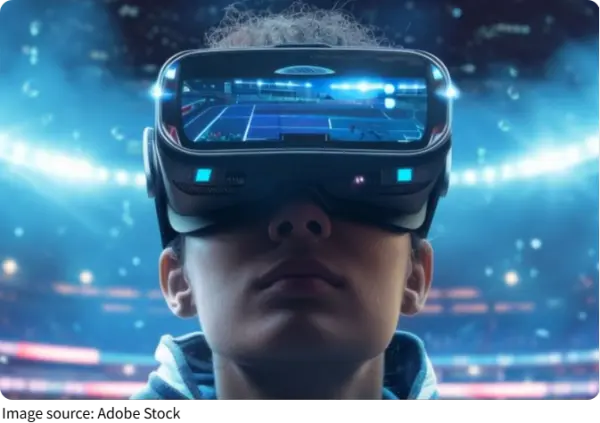
Hello, Lykkers! Imagine exploring the surface of Mars, walking through ancient civilizations, or performing a virtual surgery—all from your classroom. This is the power of virtual reality (VR), and it’s not just transforming how we learn—it’s also reshaping how money flows into education.
Let’s dive into how VR is influencing education investments and why it’s becoming a major focus for the future.
The Rise of Immersive Learning
For decades, education has relied on textbooks, lectures, and static visuals. VR changes that by offering immersive, hands-on experiences. Instead of simply reading about a concept, students can interact with it.
This shift toward experiential learning is significant because it improves engagement and retention. When students are actively involved, they tend to understand concepts faster and remember them longer. For investors and institutions, this means better outcomes—making VR a compelling area to fund.
Why Buying an Older Property Could Make You Richer Than Any Brand-New Development Ever Will!
Small Companies Are Quietly Overtaking Giants — And Innovation Is the Only Reason Why
The Hidden Cost of Not Training Your Team Will Shock You
The Real Price of AI Learning Systems Goes Far Beyond the Initial Investment
The Internet Just Made Solar Energy Investing Available to Everyone—Here's What You Need to Know
The Surprising Reason the Clean Energy Revolution Could Stall Before It Starts
Why Investors Are Taking Notice
From a financial standpoint, VR addresses a key challenge in education: efficiency. Traditional methods can be time-consuming and sometimes ineffective, especially for complex subjects.
VR offers a scalable solution. A single virtual simulation—like a chemistry lab or a flight simulator—can be used repeatedly by thousands of students across different locations. This reduces the need for expensive physical infrastructure while maintaining high-quality learning experiences.
As a result, venture capitalists and education companies are increasingly investing in VR platforms, content development, and hardware ecosystems.
Expert Insight on VR in Education
Chris Dede (Professor at Harvard Graduate School of Education, specializing in immersive learning technologies) explains that VR enables learning experiences that would otherwise be impossible, allowing students to “experience situations rather than just read about them.”
His perspective highlights why VR is gaining traction: it transforms abstract concepts into tangible experiences. This added value is exactly what investors look for—technology that not only innovates but also delivers measurable impact.
Balancing Costs and Long-Term Value
One of the biggest debates around VR in education is cost. High-quality headsets, software development, and teacher training require significant upfront investment.
However, when viewed over the long term, VR can actually reduce costs. Schools can replace expensive field trips, physical labs, and specialized equipment with virtual alternatives. Over time, this leads to savings and more efficient resource allocation.
For investors, this creates a classic opportunity: high initial costs with strong long-term returns. As technology advances and hardware becomes more affordable, adoption is expected to grow rapidly.
Expanding Access to Education
Another powerful impact of VR is accessibility. Students in remote or underserved areas can access the same immersive experiences as those in well-funded institutions.
This has major financial implications. Governments and organizations are more likely to invest in technologies that reduce inequality and expand access to quality education. VR fits perfectly into this goal by breaking down geographical and economic barriers.
In this way, VR is not just an educational tool—it’s a driver of social and economic inclusion.
Corporate Training and Workforce Development
Beyond schools, VR is also transforming corporate training. Companies are investing heavily in VR simulations to train employees in fields like healthcare, manufacturing, and aviation.
These simulations allow workers to practice real-world scenarios without real-world risks. This leads to faster learning, fewer errors, and lower training costs.
For businesses, the financial benefits are clear: improved productivity and better-prepared employees. This has made VR a key part of workforce development strategies.
The Future of Education Investments
Looking ahead, VR is expected to become a central pillar of education technology. As hardware becomes cheaper and content more sophisticated, adoption will continue to expand.
While challenges remain—such as technical limitations and the need for teacher training—the overall trend is clear. VR is moving from a niche innovation to a mainstream investment priority.
Final Thoughts
Lykkers, virtual reality is doing more than enhancing education—it’s redefining how we invest in it. By improving learning outcomes, reducing long-term costs, and expanding access, VR is proving to be a powerful force in shaping the future.
For investors, educators, and learners alike, one thing is certain: the journey of knowledge is becoming more immersive—and more valuable—than ever before.