Trading Without Numbers

Nolan O'Connor
| 14-02-2026
 · News team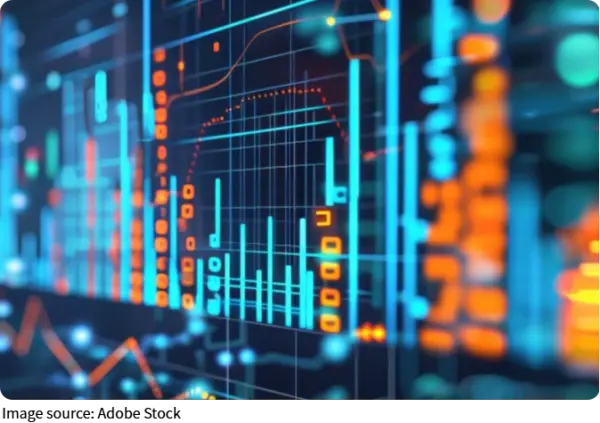
Hey Lykkers! Let’s play a quick game. Close your eyes and picture “the stock market.” What did you see? If you’re like most, a chaotic grid of numbers, flashing red and green candlesticks, and scrolling tickers probably filled your mind. It’s a language of precision, but also one of noise and overload.
Now, what if your trading dashboard looked more like a serene, living painting—a pulsing aurora of color or a calm, topological landscape view? What if, instead of analyzing the market, you could learn to feel its rhythm? Welcome to the frontier of financial design, where the future of trading isn’t about more numbers, but better intuition. This is the world of abstract visual languages.
Goodbye Candlesticks, Hello Color Fields
This Partnership Feels Perfect—Do These 10 Checks Before You Sign Anything
Your Crypto Just Pumped—Here’s the Move That Turns Taxes Into New Growth
This “Empty Air” Above Your Home Could Become Your Next Big Asset
The Sneaky Reason Rising Charts Motivate You (And How to Make It Work for You)
Your Returns Aren’t Really Yours Until You See This Tax Trap
Your Financial Slides Are Failing—Try This One Change and Watch Decisions Happen Faster
The radical idea is simple: leave the literal behind. Remove the precise price ticks and the jagged candle wicks. In their place, imagine a single, expansive color field on your screen.
A deep, calm blue might represent a stable, low-volatility market. As volatility picks up, the blue could churn into textured whites and greys. A strong bullish trend might gently warm the entire field to a golden hue, while a sharp downturn could see vivid crimson patterns erupt and fade. David McCandless, a data journalist and information designer, states, “It feels like we’re all suffering from information overload or data glut… and the good news is… using our eyes more.” You’re not reading the volatility; you’re sensing the market’s mood.
Sensing the Flow: Particles and Topography
But color is just the first layer. To represent the complex flow of buy and sell orders, designers are using dynamic particle systems. Picture thousands of tiny points of light flowing like a river. A dense, fast-moving current represents high liquidity and strong trend momentum. A scattered, slow, or turbulent flow indicates indecision and choppy, risky price action.
For the macro view, imagine a 3D topographic surface of “market strength.” Peaks and high plateaus represent strong support zones—areas where buying interest is concentrated. Valleys and cliffs show areas of weakness or potential breakdown. Your eye learns to navigate the financial landscape intuitively, spotting patterns in the shape of the terrain itself.
The Sound of the Market: Auditory Data
he most immersive systems integrate ambient sound. A low, steady hum could denote baseline trading volume. As volume spikes, the pitch and complexity of the sound might increase, creating an auditory intensity layer. A major news event might trigger a distinctive chime.
Used carefully, sound can act like a second channel of awareness—helping you notice when conditions shift, without forcing you to stare at more numbers. The goal is not to “replace” analysis, but to reduce friction in the moment when your attention is limited.
Why This Isn't Just Art—It's a Cognitive Tool
This shift isn’t about making pretty backgrounds. It’s a direct response to cognitive overload. The human brain is exceptional at spotting patterns in shapes, colors, and movements, but it’s slow and clumsy at parsing endless streams of digits. Abstract visualization leverages our innate, pre-cognitive strengths.
A trader can glance at a color-field interface and instantly gauge the market’s “temperature.” They can sense a trend’s weakening momentum by seeing a particle river begin to diffuse. This frees the conscious, analytical mind to focus on higher-level strategy rather than basic data decoding.
How to Start Developing Your Visual Intuition
You don’t need a sci-fi terminal to begin. Start by practicing with your existing charts:
1. Squint. Literally blur your vision. What are the dominant colors and shapes?
2. Mute the noise. Hide price labels for a moment. What is the pure form of the trend telling you?
3. Seek out tools. Explore next-gen interfaces and data-art experiments that play with these ideas.
Lykkers, the future of trading isn’t about getting more information. It’s about getting better meaning. By translating the market into a visual and sensory language, we’re not dumbing down finance—we’re tapping into a deeper, faster, and profoundly human form of intelligence. Start learning to see the music of the markets.